

Fast work is not the same as frantic work. We see that confusion every day. A full inbox, back-to-back messages, short deadlines, and sudden requests can make everything feel urgent. When that happens, people stop choosing their pace and start reacting to it.
Urgency becomes harmful when it turns into our default mode, not our rare response to real pressure.
In our experience, this shift is subtle. A team starts by moving fast for a good reason. Then speed becomes identity. Soon, every request gets the same energy, every message feels loaded, and every pause feels wrong. People stay active, but their judgment gets thinner.
We think calm is often misunderstood in busy work. Calm does not mean slow, passive, or detached. It means clear. It means being able to tell the difference between what matters now, what matters later, and what only feels loud.
Why urgency becomes a habit
Urgency often starts as a survival pattern. A person gets praised for replying fast. A manager solves one crisis after another. A team gets used to last-minute pushes. The body and mind learn that tension equals value.
That lesson is costly. A PLOS ONE study on distractions and interruptions in work settings found that interruptions accounted for most of the time loss in the sample, with roughly 13% of working time lost in office and manufacturing contexts. We cannot stay calm if our attention is constantly being split.
We have seen this in simple moments. Someone opens a document, gets a message, checks email, joins a call, returns to the task, and no longer trusts their own focus. The day looks full. Yet little moves with depth.
Noise is not progress.
When urgency becomes culture, people stop asking better questions. They ask, “How fast can we do this?” before asking, “Does this need to be done now?” That is when strain starts shaping decisions.
What calm work really looks like
Calm work still has deadlines. It still has pressure. It still asks a lot from us. The difference is that calm work has structure around the pressure, so pressure does not control the whole day.
Calm work protects attention before it protects appearances.
We can feel the difference in teams that work this way. The tone is steady. Requests are clearer. Response times are more honest. People do not perform panic to prove commitment.
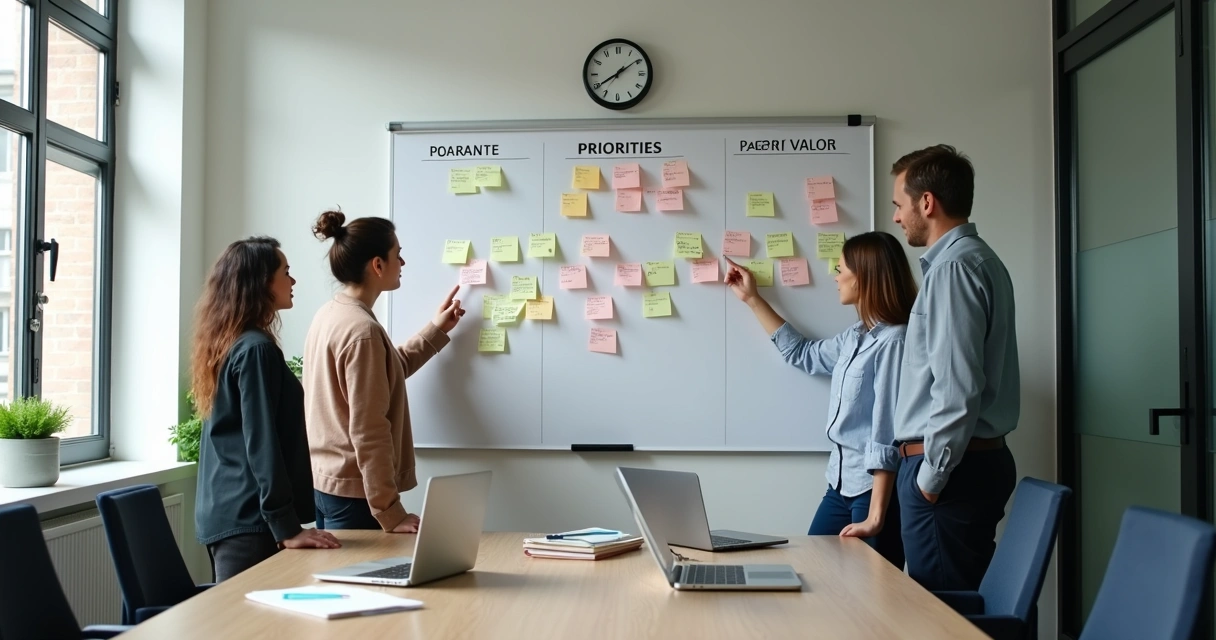
A useful frame is to separate work into three groups:
True urgency, when delay creates real harm or blocks others.
Planned priority, when the task matters a lot but does not require panic.
Emotional urgency, when something feels pressing because of anxiety, habit, or social pressure.
Many teams mix these three together. Once we start naming them, our choices become cleaner.
How to respond without rushing
We do not remove urgency from work by wishful thinking. We do it through small and repeatable moves. These strategies help because they reduce confusion at the point where stress usually takes over.
First, pause before you label something urgent. A two-minute delay to assess a request can save two hours of scattered effort later. We suggest asking:
What happens if this waits until later today?
Who is truly affected by delay?
What is the next useful step, not the whole solution?
Second, give time pressure a better meaning. Research from Macquarie University on how employees appraise time pressure and job complexity showed that people who saw these demands as a challenge, instead of a threat or hindrance, reported lower emotional exhaustion and less mental stress. We cannot always lower the pace around us, but we can change the inner stance we bring to it.
That does not mean pretending everything is fine. It means saying, “This is a lot, but I can meet it in steps.” That sentence has force because it keeps us engaged without feeding alarm.
Third, reduce unnecessary access. Not every channel deserves instant attention. We think teams do better when they define simple response rules, such as:
Email is not for immediate action.
Chat is for short coordination, not deep problem-solving.
Calls are for issues that are truly time-sensitive.
Focused work blocks are protected unless there is a real need.
These rules do not make work rigid. They make work readable.
Boundaries that lower pressure
We often hear people say they need better boundaries, but they speak as if boundaries were a personality trait. In practice, boundaries are clearer when they become visible habits.
Boundaries work best when they are stated early, repeated calmly, and backed by action.
Here are a few examples that tend to help:
Start the day by naming your top two priorities before opening all channels.
Use one or two fixed times to check non-urgent messages.
State realistic turnaround times instead of trying to impress people with instant replies.
End the day with a short shutdown note so unfinished work does not follow you into the evening.
A randomized controlled trial from Sweden found that a mindfulness intervention for managers improved work-life balance, boundary control, and psychological detachment over six months. We find that result meaningful because it shows calm is trainable. It is not only a trait some people have. It can be built.

Leading calm in a fast environment
Whether we lead a team or only ourselves, our emotional tone shapes the space around us. If we answer every issue with visible tension, others learn to do the same. If we stay clear under pressure, people trust the process more.
This does not require a perfect mood. It asks for steadiness. We can say, “This is time-sensitive, so here is the order.” We can say, “This matters, but it is not for today.” We can say, “I need one hour to think before I answer.” These are forms of leadership.
We believe mature work is not built by constant acceleration. It is built by discernment. There will be days when the pace is intense. That is part of modern work. But intensity does not need to become our identity.
Conclusion
When we stop defaulting to urgency, we do not become less committed. We become more deliberate. We protect attention, make better decisions, and reduce the emotional spill that rushed work creates. Calm is not a luxury for slow days. It is a discipline for real ones.
If our days feel fast, we do not need more panic. We need better filters, stronger boundaries, and a steadier inner posture. That is how we work with speed without being ruled by it.
Frequently asked questions
What is urgency culture at work?
Urgency culture at work is a pattern where everything is treated as time-sensitive, even when it is not. People feel pressure to reply at once, switch tasks often, and stay in a constant state of alert. Over time, this turns speed into a social expectation rather than a real need.
How to avoid always feeling rushed?
We can avoid always feeling rushed by pausing before reacting, sorting tasks by real priority, and protecting blocks of focused time. It also helps to check messages at planned times, not all day, and to define what truly needs a same-day response.
What are calm strategies for busy teams?
Calm strategies for busy teams include clear response rules, shared priority lists, fewer interruptions, and direct language about deadlines. Teams also benefit from protected focus time and from naming what is urgent, what is planned, and what can wait.
Does urgency hurt work performance?
Yes, constant urgency can hurt work performance because it increases interruptions, weakens focus, and pushes people into reactive decisions. Short bursts of urgency may help in real deadlines, but living in that mode all the time tends to reduce clarity and raise stress.
How can I set better work boundaries?
We can set better work boundaries by stating response times clearly, limiting after-hours availability, and ending the day with a simple closure routine. Boundaries are stronger when they are visible in daily habits, not only held as private intentions.